research
Work in Progress
-
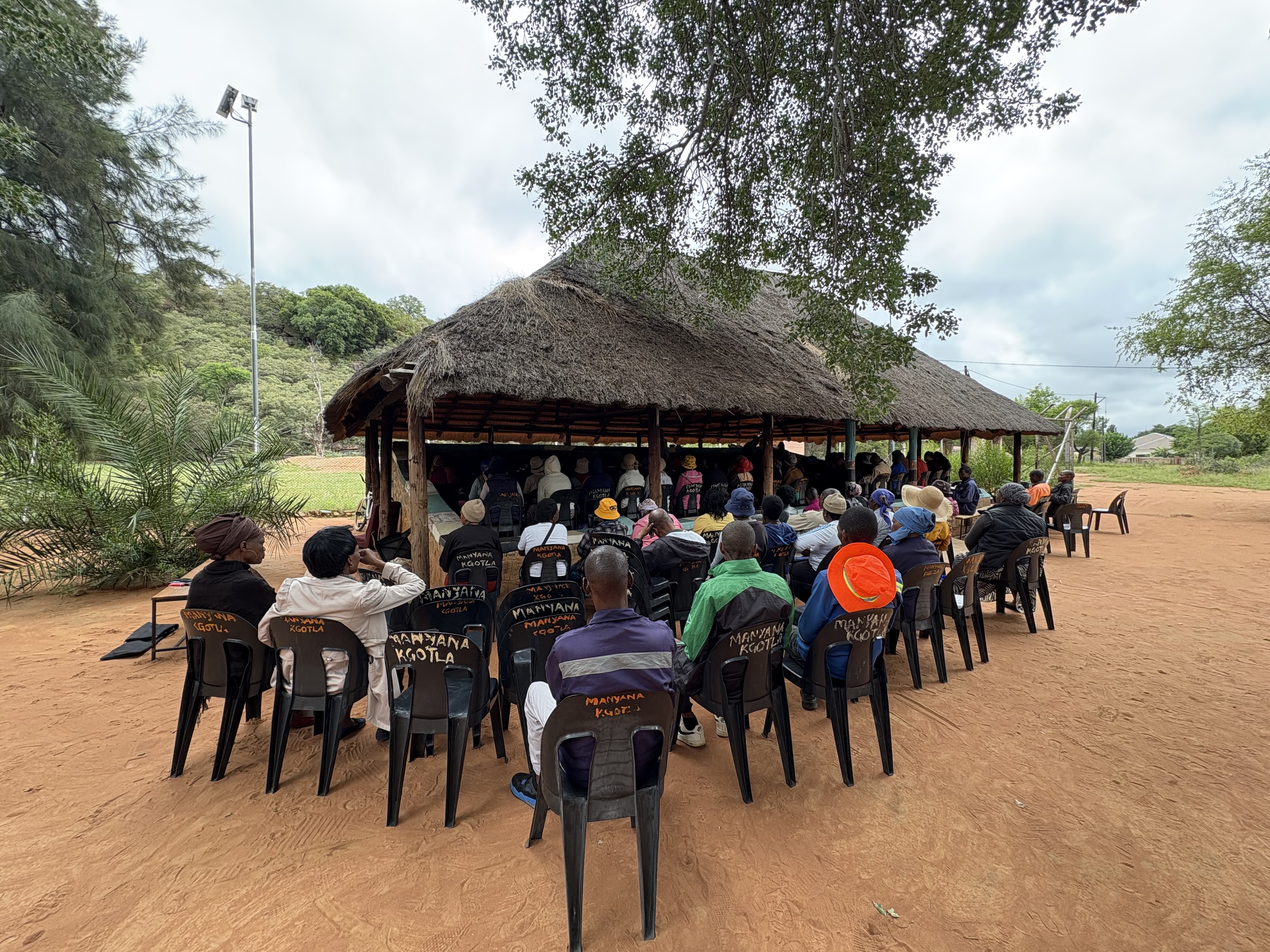 A Culture of Consensus. Collective Choice under Alternative Political Institutions in BotswanaJulio S. Solís Arce
Decision-making by consensus has been the preferred collective choice rule of innumerable human groups throughout history, yet majority rule dominates contemporary political institutions. When societies that traditionally make decisions by consensus are required to adopt majority rule, this may undermine the norms that sustain cooperation and legitimacy within the polity. To examine this possibility, I propose a lab-in-the-field experiment in Botswana, a country known for its consensus-based traditional institutions. Using a public goods game in which decision-making rules are randomized, I test whether consensus enhances cooperation and the perceived legitimacy of outcomes relative to majority rule. I further examine whether cooperation is highest when consensus procedures are embedded in traditional institutions, particularly when they involve the presence of a local chief. As a potential mechanism, I propose that a *botho* cultural orientation, which emphasizes interconnectedness and communal well-being, sustains cooperation under consensus but weakens under majority rule.
-
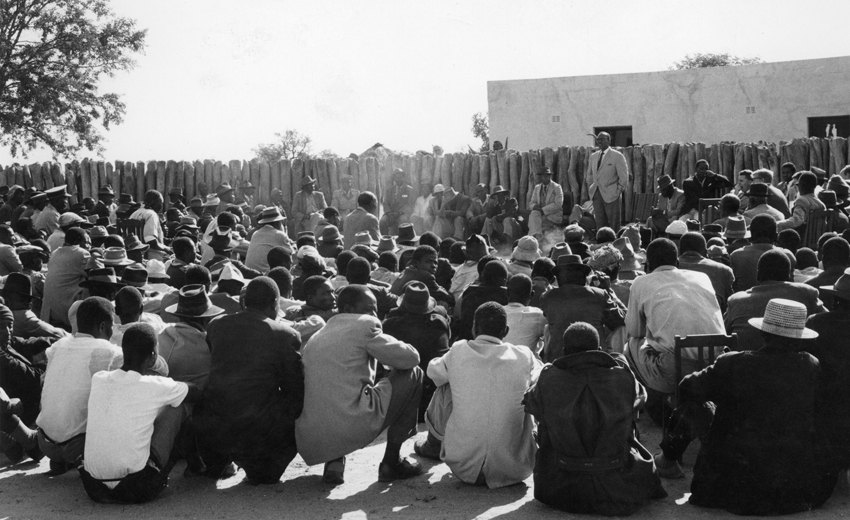 Consensus: Theory and Evidence from an African Collective Choice RuleJulio S. Solís Arce
A long tradition in anthropology, political theory, and African political thought emphasizes consensus as a distinctive mode of collective decision-making across many African societies. Consensus involves open deliberation, the presentation and weighing of alternatives, and a final recommendation made by a respected authority figure. This rule blends participatory and deliberative features with hierarchical elements grounded in cultural values such as collectivism and deference to elders or chiefs. Using cross-country evidence from Afrobarometer and precolonial institutional data, I show that contemporary preferences for consensus are shaped by historical practices of leader selection and are positively correlated with collectivistic orientations. Yet these same preferences are also associated with greater acceptance of nondemocratic political arrangements, including one-party rule and governance by chiefs or strongmen. These findings underscore the dual character of consensus: it can support inclusive deliberation, but its hierarchical structure may also undermine efforts to consolidate Western-style democratic institutions in Africa.
-
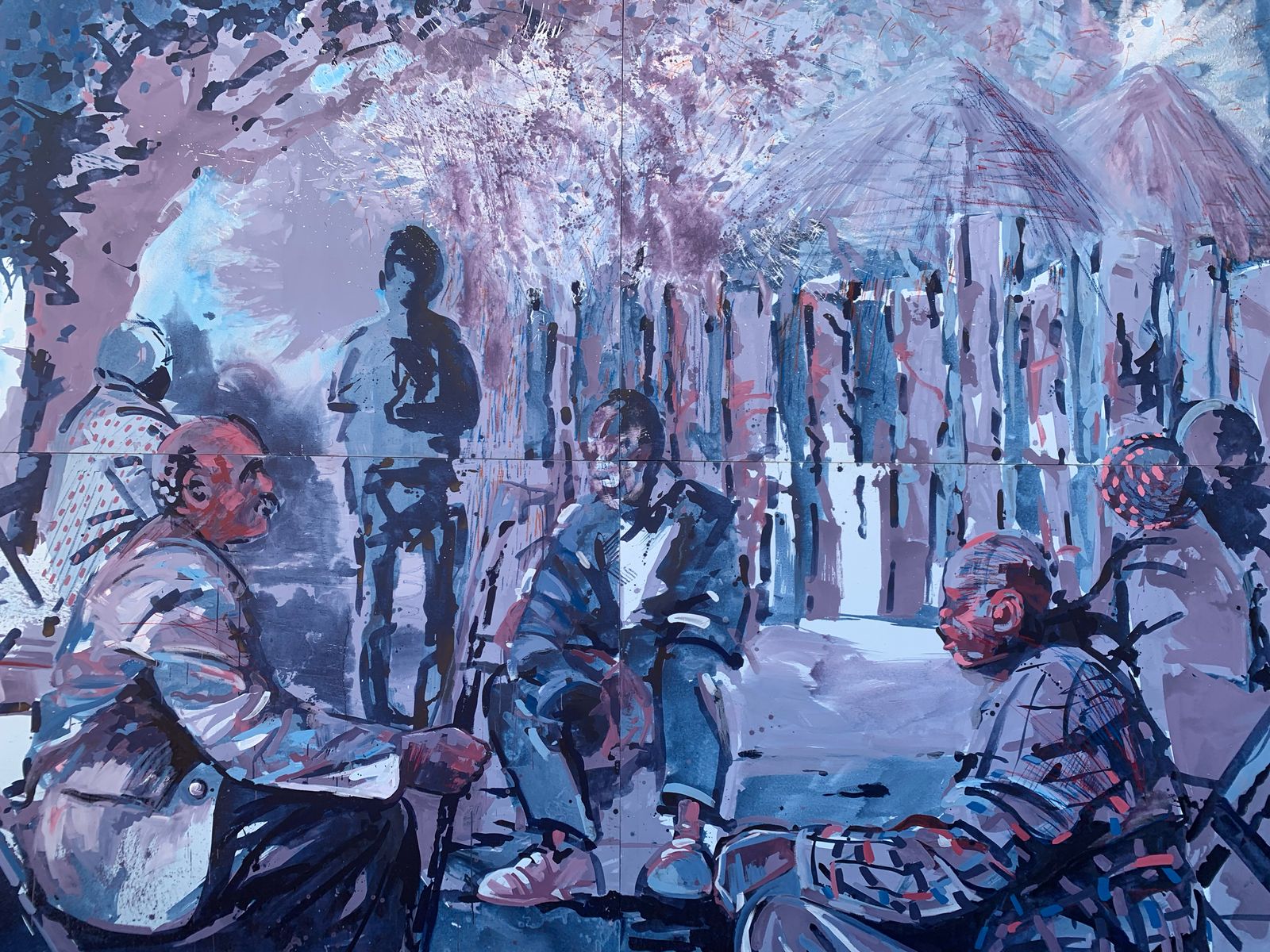 Political Development: Normative Principles for Comparing SocietiesJulio S. Solís Arce
Work in Progress: The aim of this paper is to challenge conventional notions of political development that prioritize the state and Western-style democracy as universal benchmarks. First, I present political development as defined by modernization theory (comparative politics) and neo-evolutionary theory (anthropology). Next, I argue that these approaches inadequately capture the diversity of political systems across societies. I propose to redefine political development based on normative principles of political equality and legitimacy: a more politically developed society is one that promotes political equality and can transition between equality and inequality with the consent of its population. I illustrate the points using old and new archeological and anthropological evidence of alternative forms of political life in small and non-state societies.
-
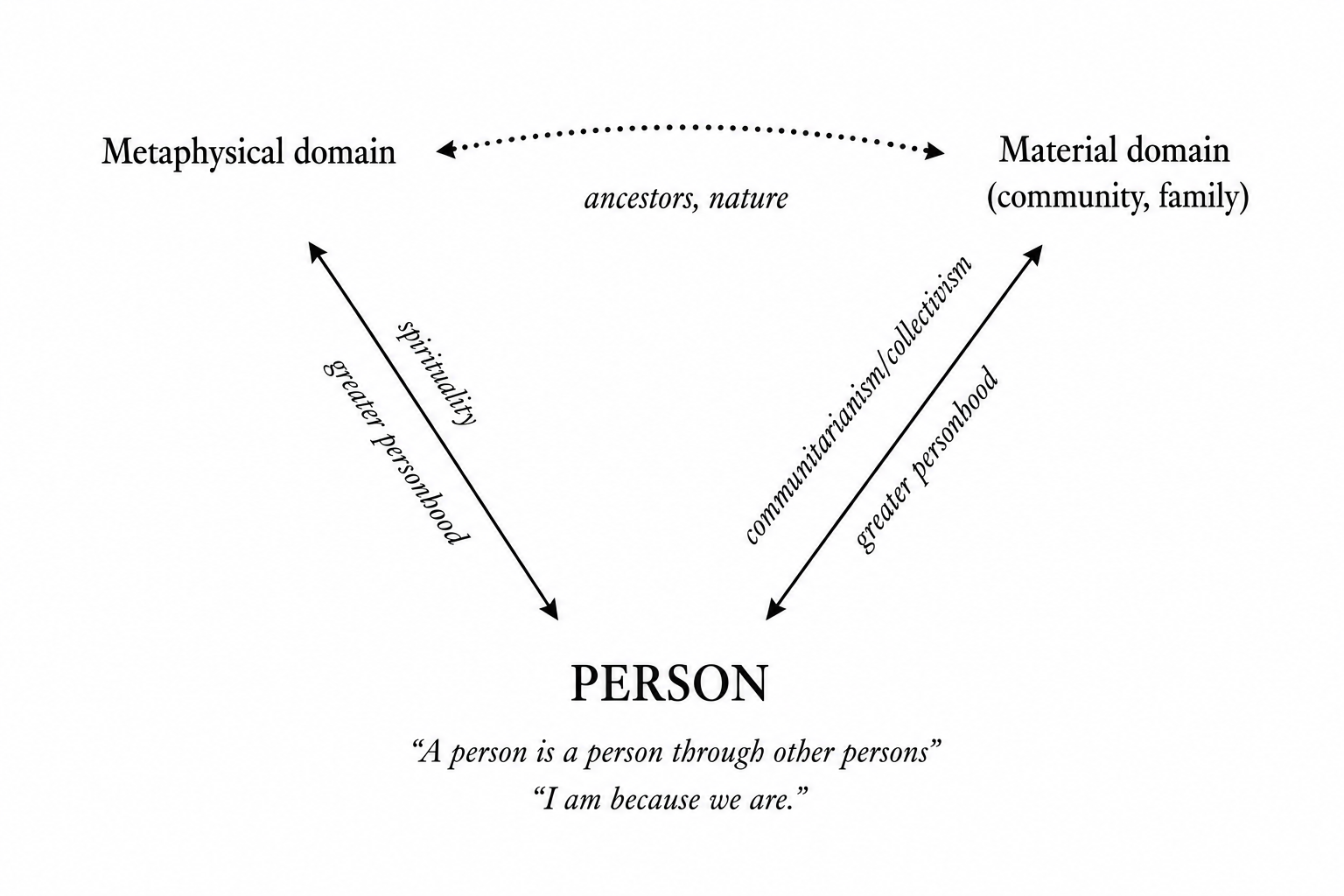 UbuntuStephen Baffour Adjei, Frederick Anyan, Daniel Hofmann, and 4 more authors
This paper develops a definition and survey measure of Ubuntu. Following a multidisciplinary literature review and an expedited Delphi-style consultation with experts and regional stakeholders, we define Ubuntu as the view that personhood and flourishing are constituted through reciprocal, dignifying relationships with others. We translate this definition into survey items capturing relational identity, mutual care, shared responsibility, respect, and collective flourishing. Using data from Botswana, Kenya, Namibia, and South Africa, we evaluate the scale’s dimensionality, reliability, validity, and cross-country measurement invariance. We also distinguish Ubuntu from related constructs, including collectivism, prosociality, and social trust. The resulting measure enables systematic analysis of how relational moral commitments shape economic preferences, behavior, institutions, and development outcomes across African settings.
-
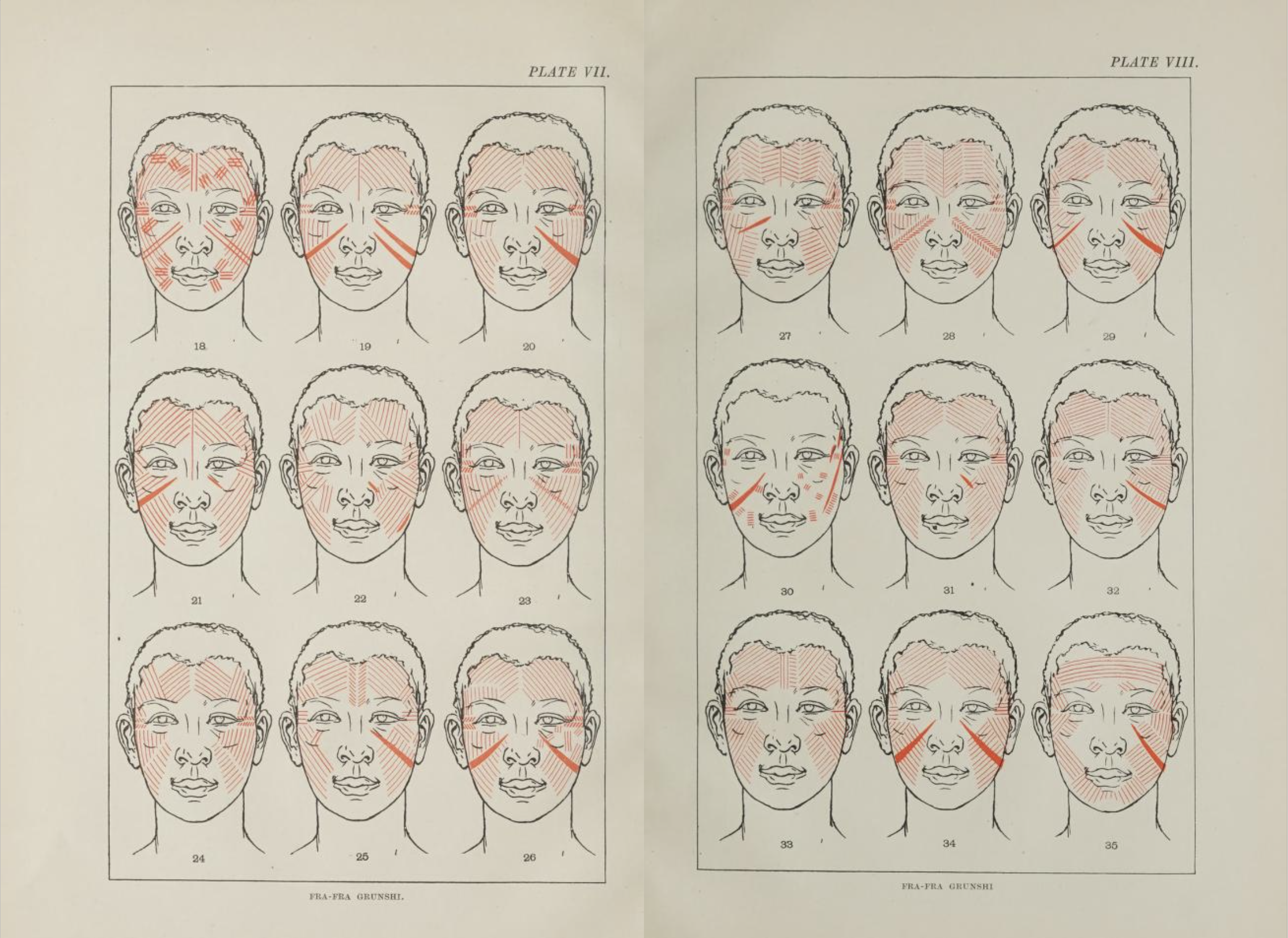 ScarificationDaniel Araujo, Olaitan Ogunnote, and Julio S. Solís Arce
Work in Progress: Scarification refers to the deliberate incision of the skin—most often on the face—to create permanent, highly visible marks that historically signal ethnic, clan, or village belonging. As an ethnic cue, scarification is unusually immutable, easily legible, and publicly observable, yet no national survey has systematically documented its prevalence. This article addresses that empirical gap by introducing the first nationally representative dataset on identity scarification in Ghana and Nigeria. In partnership with Afrobarometer, trained enumerators directly observed whether respondents, household members, and others in the community bore identity scars, producing unprecedented estimates: 11–16 percent of adults, 12–18 percent of households, and 42–46 percent of communities include marked individuals, amounting to about 40 million people in these two countries. We uncover strong socioeconomic and geographic gradients—marking is more common in rural areas, among the less educated, and among poorer households. We provide evidence on how visible ethnic markers shape identity, trust, and political behavior. Finally, we document its relationship with violent conflict in the region.
Project Development
- AI-Powered Civic Information and Participation in Ghana’s Constitutional ReformJosé Ramón Enríquez and Julio S. Solís Arce
This project examines whether AI-assisted deliberation can improve citizen engagement, information acquisition, and participation in constitutional reform processes. While theories of democratic legitimacy emphasize the importance of informed and inclusive participation, complex reforms often unfold in low-information and polarized environments that hinder meaningful public input. We study this problem in the context of Ghana’s ongoing constitutional reform. We deploy deliberation.io, an AI-based platform that engages citizens in interactive, adaptive dialogues presenting policy trade-offs and encouraging reflection tailored to individual knowledge levels. We embed this intervention in a large-scale field experiment, implemented in partnership with governmental and civil society organizations, and benchmark it against conventional information campaigns. We evaluate effects on perceived political knowledge, beliefs about inclusion in the reform process, and participation in a potential referendum.
Funding: Stanford King Center on Global Development. - Agents of Change: Identifying and Training Community Leaders to Renew Political Institutions in HaitiOmar García Ponce, Julio S. Solís Arce, and Rochelle Sun
Haiti faces a governance crisis marked by widespread gang control and institutional collapse. With elections scheduled for 2026, some elites advocate accommodating violent actors in public office as a pragmatic response to insecurity. This project studies how pessimistic expectations about political order shape citizens’ evaluations of political leadership and bias political selection toward coercive actors, and it proposes an experimental intervention to shift outcomes toward a more positive equilibrium. Using interviews and focus groups in localities with varying levels of gang control, we examine how citizens assess competing sources of legitimacy and the barriers to candidacy for non-violent community leaders. Informed by this fieldwork, we plan to design and implement a two-stage field experiment that crowdsources nominations of trusted local actors and supports selected individuals in exploring pathways for public leadership by highlighting their social standing and leadership skills, and by providing training in governance and citizen engagement.
Funding: Innovations for Poverty Action (IPA) Peace & Recovery Program and Abdul Latif Jameel Poverty Action Lab (J-PAL) Crime and Violence Initiative. - Psychedelics, Culture and Development: Evidence from MexicoMauricio Fernández Duque and Julio S. Solís Arce
Recent research on psychedelics has documented effects on prosociality, openness, and belief formation, but evidence remains largely at the individual level. This project asks whether long-standing, culturally embedded psychedelic practices shape social preferences in ways that scale up to influence political and economic institutions. In particular, such practices may foster cooperation, trust, and social cohesion, while also reinforcing the authority of ritual specialists and hierarchical forms of governance. Focusing on Indigenous communities in Oaxaca, Mexico, the study exploits variation in historical exposure to psychedelic use to enable comparative analysis. The research combines qualitative fieldwork to document norms, authority structures, and collective decision-making with the piloting of behavioral games that measure cooperation, reciprocity, and coordination.
Funding: Psychedelics in Society and Culture Initiative.
COVID-19 Collaborative Projects
- NatMedCOVID-19 Vaccine Acceptance and Hesitancy in Low- and Middle-Income CountriesJulio S. Solı́s Arce, Shana S. Warren, Niccolò F. Meriggi, and 71 more authorsNature Medicine, 2021
Widespread acceptance of COVID-19 vaccines is crucial for achieving sufficient immunization coverage to end the global pandemic, yet few studies have investigated COVID-19 vaccination attitudes in lower-income countries, where large-scale vaccination is just beginning. We analyze COVID-19 vaccine acceptance across 15 survey samples covering 10 low- and middle-income countries (LMICs) in Asia, Africa and South America, Russia (an upper-middle-income country) and the United States, including a total of 44,260 individuals. We find considerably higher willingness to take a COVID-19 vaccine in our LMIC samples (mean 80.3%; median 78%; range 30.1 percentage points) compared with the United States (mean 64.6%) and Russia (mean 30.4%). Vaccine acceptance in LMICs is primarily explained by an interest in personal protection against COVID-19, while concern about side effects is the most common reason for hesitancy. Health workers are the most trusted sources of guidance about COVID-19 vaccines. Evidence from this sample of LMICs suggests that prioritizing vaccine distribution to the Global South should yield high returns in advancing global immunization coverage. Vaccination campaigns should focus on translating the high levels of stated acceptance into actual uptake. Messages highlighting vaccine efficacy and safety, delivered by healthcare workers, could be effective for addressing any remaining hesitancy in the analyzed LMICs.
@article{solis2021covid,
  title = {COVID-19 Vaccine Acceptance and Hesitancy in Low- and Middle-Income Countries},
  author = {Sol{\'\i}s Arce, Julio S. and Warren, Shana S. and Meriggi, Niccolò F. and Scacco, Alexandra and McMurry, Nina and Voors, Maarten and Syunyaev, Georgiy and Malik, Amyn Abdul and Aboutajdine, Samya and Adeojo, Opeyemi and Anigo, Deborah and Armand, Alex and Asad, Saher and Atyera, Martin and Augsburg, Britta and Awasthi, Manisha and Ayesiga, Gloria Eden and Bancalari, Antonella and Nyqvist, Martina Björkman and Borisova, Ekaterina and Bosancianu, Constantin Manuel and García, Magarita Rosa Cabra and Cheema, Ali and Collins, Elliott and Cuccaro, Filippo and Farooqi, Ahsan Zia and Fatima, Tatheer and Fracchia, Mattia and Soria, Mery Len Galindo and Guariso, Andrea and Hasanain, Ali and Jaramillo, Sofía and Kallon, Sellu and Kamwesigye, Anthony and Kharel, Arjun and Kreps, Sarah and Levine, Madison and Littman, Rebecca and Malik, Mohammad and Manirabaruta, Gisele and Mfura, Jean Léodomir Habarimana and Momoh, Fatoma and Mucauque, Alberto and Mussa, Imamo and Nsabimana, Jean Aime and Obara, Isaac and Otálora, María Juliana and Ouédraogo, Béchir Wendemi and Pare, Touba Bakary and Platas, Melina R. and Polanco, Laura and Qureshi, Javaeria Ashraf and Raheem, Mariam and Ramakrishna, Vasudha and Rendrá, Ismail and Shah, Taimur and Shaked, Sarene Eyla and Shapiro, Jacob N. and Svensson, Jakob and Tariq, Ahsan and Tchibozo, Achille Mignondo and Tiwana, Hamid Ali and Trivedi, Bhartendu and Vernot, Corey and Vicente, Pedro C. and Weissinger, Laurin B. and Zafar, Basit and Zhang, Baobao and Karlan, Dean and Callen, Michael and Teachout, Matthieu and Humphreys, Macartan and Mobarak, Ahmed Mushfiq and Omer, Saad B.},
  journal = {Nature Medicine},
  volume = {27},
  number = {8},
  pages = {1385--1394},
  year = {2021},
  publisher = {Nature Publishing Group},
  doi = {https://doi.org/10.1038/s41591-021-01454-y},
  url = {https://www.nature.com/articles/s41591-021-01454-y},
  replication = {https://github.com/wzb-ipi/covid_vaccines_nmed},
  media = {https://nature.altmetric.com/details/109629548},
  keywords = {health, development},
  status = {published}
}

- SSRNGathering, Evaluating, and Aggregating Social Scientific ModelsMiriam A. Golden, Tara Slough, Haoyu Zhai, and 29 more authorsSSRN Working Paper, 2023
On what basis can we claim a scholarly community understands a phenomenon? Social scientists generally propagate many rival explanations for what they study. How best to discriminate between or aggregate them introduces myriad questions because we lack standard tools that synthesize discrete explanations. In this paper, we assemble and test a set of approaches to the selection and aggregation of predictive statistical models representing different social scientific explanations for a single outcome: original crowd-sourced predictive models of COVID-19 mortality. We evaluate social scientists’ ability to select or discriminate between these models using an expert forecast elicitation exercise. We provide a framework for aggregating discrete explanations, including using an ensemble algorithm (model stacking). Although the best models outperform benchmark machine learning models, experts are generally unable to identify models’ predictive accuracy. Findings support the use of algorithmic approaches for the aggregation of social scientific explanations over human judgement or ad-hoc processes.
@article{golden2023gathering,
  title = {Gathering, Evaluating, and Aggregating Social Scientific Models},
  author = {Golden, Miriam A. and Slough, Tara and Zhai, Haoyu and Scacco, Alexandra and Humphreys, Macartan and Vivalt, Eva and Diaz-Cayeros, Alberto and Dionne, Kim Yi and KC, Sampada and Nazrullaeva, Eugenia and Aronow, P. M. and Brethouwe, Jan-Tino and Buijsrogge, Anne and Burnett, John and DeMora, Stephanie and Enríquez, José Ramón and Fokkink, Robbert and Fu, Chengyu and Haas, Nicholas and Hayes, Sarah Virginia and Hilbig, Hanno and Hobbs, William R. and Honig, Dan and Kavanagh, Matthew and Lindelauf, Roy H. A. and McMurry, Nina and Merolla, Jennifer L. and Robinson, Amanda and Solís Arce, Julio S. and ten Thij, Marijn and Türkmen, Fulya Felicity and Utych, Stephen},
  journal = {SSRN Working Paper},
  year = {2023},
  doi = {http://dx.doi.org/10.2139/ssrn.4570855},
  url = {https://ssrn.com/abstract=4570855},
  keywords = {meta-science, model aggregation, model selection, COVID-19, public health},
  status = {wp}
}